

At Live Earth Farm, the natural world is not just the backdrop to our work. It is our classroom, our inspiration, and an essential part of the community we are working to nurture. From the redwood groves and oak woodlands to the birds, insects, and other animals that share this landscape, we are fortunate to work in a place where nature is very much alive.
Recently, we experienced a difficult reminder of what it means to share this land with wildlife: a mountain lion preyed on our goat herd.
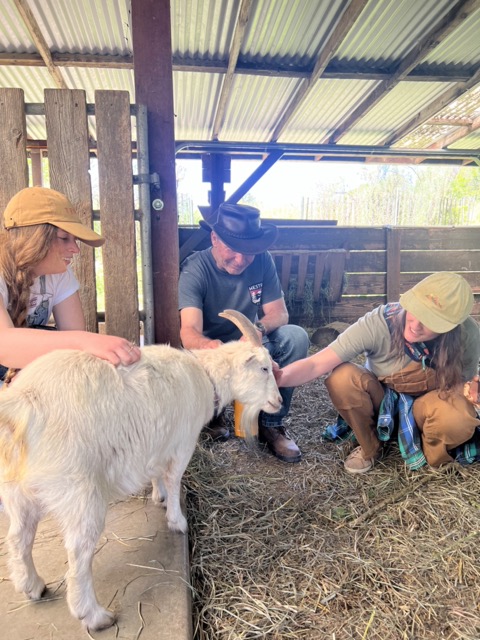 For those of us who care for the animals at the farm, this was a painful loss. Our goats, Rosie, Acorn, Pepper, Chewie and Comet are familiar faces to the many children and families who visit Farm Discovery. They are part of the hands-on experiences that help young people develop curiosity, confidence, and a deeper connection to the living world. Losing animals we have cared for is difficult, and we are holding that loss with sadness and care.
At the same time, this experience has invited us to reflect on the complex relationship between farming, animal care, and the wild ecosystems that surround us.
This predator belongs here, too
Mountain lions are native to California and are an important part of our state’s ecosystems. As apex predators, they help regulate prey populations and contribute to the ecological relationships that sustain healthy landscapes. They are typically solitary and elusive animals that generally avoid people. But mountain lions are also opportunistic hunters. While their diets consist primarily of wild prey, they may sometimes prey on domestic animals, including goats and other livestock. When farms and other human activities exist near wild habitat, these encounters can happen. For the mountain lion, a goat is prey. For us, each goat is an animal we have a responsibility to protect and care for. Both realities are true, even when they are difficult to reconcile. Understanding this does not make the loss easier. It does, however, help us approach the situation with a clearer understanding of the wildlife with whom we share this place.
What does coexistence look like?
Living alongside wildlife does not mean accepting every loss as inevitable. Caring for animals means taking their safety seriously, learning from difficult experiences, and exploring practical ways to reduce the likelihood of future conflicts. In the wake of this incident, protecting our remaining goats and evaluating appropriate livestock-protection measures are important priorities. We have spoken with Fish and Game and will securing their nighttime enclosures.
There is no single solution that works in every setting. We have had goats on the farm for 30 years and until now our livestock guardian dogs have been enough to deter the predators. Effective protection requires understanding the specific landscape, the animals’ needs, and the circumstances surrounding an encounter. Our responsibility is to take thoughtful, practical steps to protect the animals in our care while recognizing the importance of native wildlife and the habitats that sustain it.
A living classroom, even when the lessons are hard
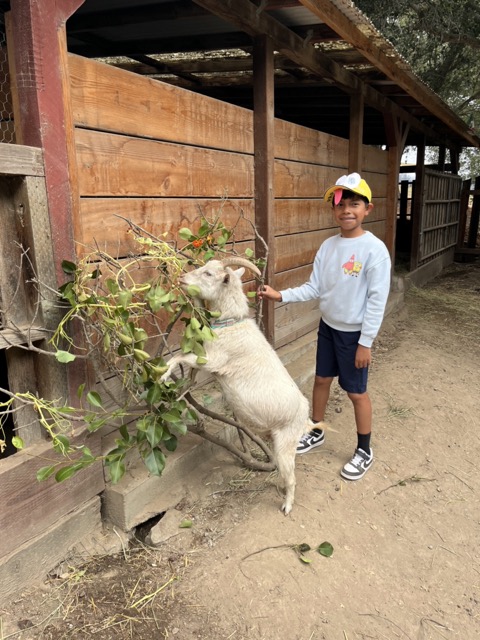 At Farm Discovery, we believe children benefit from developing meaningful relationships with the natural world. Through farm visits, camps, and hands-on learning, young people discover where food comes from, how living systems depend on one another, and what it means to care for a place. Sometimes, these lessons unfold in unexpected ways.
Farming is a relationship with the living world, and that relationship includes uncertainty, vulnerability, and loss. Nature is not always gentle or predictable. Animals behave according to their needs and instincts, and the systems that support life are interconnected in ways that can be both beautiful and challenging. We do not want children to learn that wildlife is something to fear, nor do we want to minimize the responsibility humans have to protect domestic animals. Instead, we hope to model a more thoughtful approach: one grounded in curiosity, compassion, responsibility, and respect for life. That means acknowledging the sadness of losing animals while also making room for understanding the mountain lion’s place in this landscape.
Continuing to care for this place
Our work at Farm Discovery is rooted in the belief that healthier food systems, thriving communities, and healthy ecosystems are connected. Stewardship is not always simple, and it does not mean that every encounter between human activity and wildlife will have an easy resolution. Sometimes, stewardship means protecting the animals who depend on us. Sometimes, it means learning more about the wildlife around us and adapting how we care for the land. Often, it means holding more than one truth at a time.
We are grieving the loss of members of our goat herd, and we remain committed to caring for the animals who are still with us. We are also grateful to work in a landscape that continues to support wild creatures, reminding us that this place is part of something much larger than ourselves. Sharing the land asks us to be attentive, humble, and willing to learn. Even in difficult moments, we can choose to respond with care, for our animals, for our community, and for the wild world we are fortunate to call our neighbor.
Thank you for being part of the Farm Discovery community and for supporting our work to help young people and families build meaningful connections with food, farming, nature, and one another.